

Understanding The Size Of Commercial Solar Panels
Commercial solar panels are big. Many people don’t know how big. This can make it hard to plan for a solar project. You might wonder if your roof has enough space.
A typical commercial solar panel is about 2 metres long and 1 metre wide. That’s as big as a king-size bed! These panels can weigh up to 25 kg. Knowing this helps you plan better.
This guide will explain commercial solar panel sizes in simple terms. We’ll cover standard sizes, types, and key facts. You’ll learn what to think about when planning your solar project.
Ready to learn about solar panel sizes? Let’s start!
Key Takeaways
- Commercial solar panels are big, about 2 metres long and 1 metre wide, weighing up to 25 kg.
- These panels typically produce 400W to 600W of power and can last 25-30 years, with newer models reaching up to 50 years.
- There are three main types of commercial solar panels: monocrystalline, polycrystalline, and thin film, each with unique pros and cons.
- Proper installation is key, considering factors like roof space, structural support, orientation, and tilt angle for optimal energy production.
- A mid-sized solar array can cut £5,000 off yearly power bills for businesses, making it a smart choice for cutting costs and going green.
What Are Commercial Solar Panels?
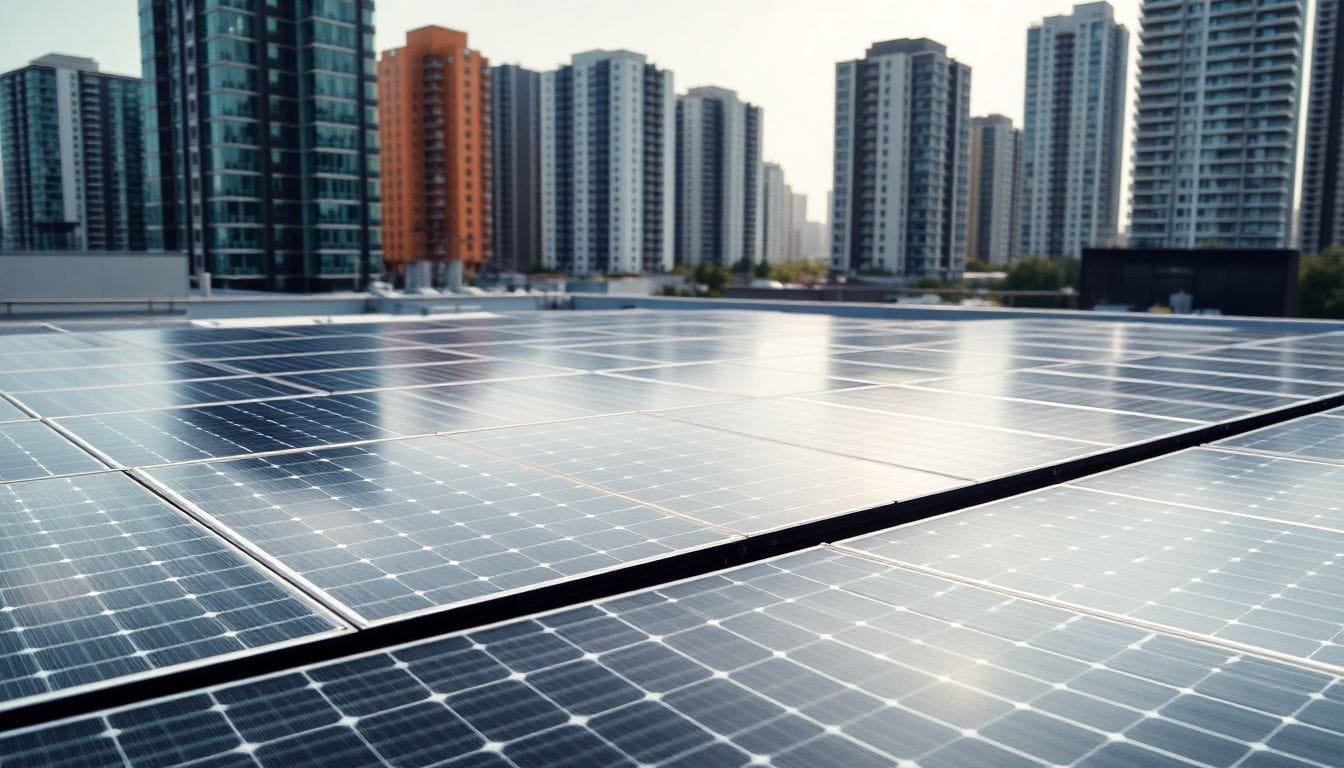
Commercial solar panels are large photovoltaic devices that turn sunlight into electricity for businesses. These panels typically produce 400W to 600W of power, much more than home units.
They’re built to last 25-30 years, with newer models reaching up to 50 years. A mid-sized array can slash £5,000 off yearly power bills. These systems need little upkeep, making them a smart choice for firms looking to cut costs and go green.
Many companies use Power Purchase Agreements to finance their solar setups, easing the initial outlay.
Standard Dimensions Of Commercial Solar Panels
Commercial solar panels come in various sizes. Most panels measure about 2 metres long and 1 metre wide.
Average Length, Width, And Thickness
Commercial solar panels have standard dimensions for efficient installation. These measurements ensure optimal energy production and ease of use.
| Dimension | Measurement |
|---|---|
| Length | 195 cm (6.40 feet) |
| Width | 99 cm (3.25 feet) |
| Thickness | 3.81 cm (0.13 feet) |
These panels are larger than residential ones. They stand almost a foot taller. The size allows for a 6 x 12 grid layout. This setup maximises sun exposure and power generation. The dimensions suit most commercial rooftops. They balance weight and output needs.
Weight Specifications
Commercial solar panels come in various weights. Here’s a breakdown of typical weight specifications:
| Panel Type | Weight Range | Notes |
|---|---|---|
| 72-cell Commercial Panels | 50+ pounds (22.7+ kg) | Standard for large-scale installations |
| 365-watt Monocrystalline | 45 pounds (20.4 kg) | High-efficiency option |
| 60-cell Residential Panels | 35-40 pounds (15.9-18.1 kg) | Lighter alternative for smaller roofs |
Panel weight affects installation methods. Heavier panels need stronger roof supports. Lighter panels suit more roof types. Weight impacts transport and handling costs too. Installers must consider panel weight for safe, efficient setups.
Types Of Commercial Solar Panels
Commercial solar panels come in three main types. Each type has its own pros and cons for different uses.
Monocrystalline Panels
Monocrystalline panels stand out in the solar industry. These panels boast high efficiency and durability. They’re made from single-crystal silicon, giving them a sleek, black look.
This type of panel performs well even in low-light conditions.
Businesses with limited roof space often choose monocrystalline panels. Their high efficiency means fewer panels are needed to produce the same amount of power. These panels also have a long lifespan, typically with a 25-30 year warranty.
This makes them a smart choice for long-term energy savings.
Monocrystalline solar cells are cut from a single crystal of silicon. This gives them a uniform look and helps them convert more sunlight into electricity. While they cost more upfront, their efficiency and longevity often make them cost-effective over time.
For commercial properties aiming to maximise solar power output, monocrystalline panels are a top pick.
Polycrystalline Panels
Polycrystalline panels stand out with their distinct blue colour. These solar units use multiple silicon crystals, making them a popular choice for many. They offer a great mix of cost and efficiency, perfect for those on a budget.
These panels work well in moderate sunlight. Their production process is eco-friendly, which appeals to green-minded buyers. Compared to other types, they’re easier on the wallet. This makes them a top pick for both homes and businesses looking to go solar.
Polycrystalline technology has improved over time. Today’s panels are more efficient than ever. They can power homes, offices, and even large factories. Many UK firms now use these panels to cut energy costs and reduce their carbon footprint.
Thin Film Panels
Thin film panels offer unique benefits for commercial solar projects. These panels are light and flexible, making them ideal for curved roofs or facades. They perform well in high heat, keeping energy output steady.
While less efficient than other types, thin film panels cost less. This makes them a good choice for large-scale installations where space isn’t an issue.
Businesses often pick thin film panels for their versatility. The panels can cover more area on buildings with limited roof strength. They’re also great for projects that need a sleek look.
Thin film technology keeps improving, promising even better performance in the future.
Factors That Affect The Size Of Commercial Solar Panels
Several factors shape the size of commercial solar panels, such as power output and space limits. Read on to learn more about these key elements.
Efficiency And Wattage
Efficiency and wattage play key roles in commercial solar panels. Higher efficiency panels convert more sunlight into power. This means they need less space to produce the same amount of energy.
Most 72-cell panels generate between 350 and 600 watts. The exact output depends on the panel’s design and materials.
Panel size links directly to wattage output. Larger panels typically produce more power. But, advances in technology have led to smaller panels with high outputs. This is due to improved cell efficiency.
Monocrystalline cells, for example, are known for their high efficiency rates. They can produce more power in a smaller area than other types.
The type of solar cell used affects both efficiency and physical traits. Some cells are better at converting light in low-light conditions. Others perform well in high heat. These factors impact the overall panel size needed for a given power output.
Choosing the right panel involves balancing efficiency, size, and cost to meet specific energy needs.
Installation Space Requirements
Commercial solar panels need ample space for proper installation. Roof size and shape play a key role in how many panels fit. A typical 60-cell panel measures about 1.6m x 1m, while a 72-cell panel is roughly 2m x 1m.
These sizes help plan the layout.
Space affects the system’s power output. More panels mean more energy, but they must fit safely. Installers check roof strength and pitch to ensure panels stay secure. They also look at shadows from nearby objects that could block sunlight.
Clear, unshaded areas work best for solar panels.
Panel efficiency impacts space needs too. Higher-efficiency panels produce more power in less space. This helps when roof area is limited. Some buildings use ground-mounted systems if roof space isn’t enough.
These systems need flat, open land near the building.
Key Considerations For Installation
Installing solar panels needs careful planning. Roof space, support, and panel angle all matter. Read on to learn more about these key points.
Roof Space And Structural Support
Roof space and structural support are crucial for commercial solar panel installation. These factors determine the feasibility and efficiency of a solar energy system.
- Assess available roof area for panel placement
- Check roof orientation for optimal sun exposure
- Evaluate roof slope to maximise energy capture
- Inspect roof condition to ensure it can support panels
- Calculate load-bearing capacity of the roof structure
- Identify obstructions like vents or skylights
- Measure shading from nearby buildings or trees
- Determine need for additional roof reinforcement
- Plan panel layout to maximise space usage
- Consider wind load factors for panel mounting
- Assess accessibility for maintenance and cleaning
- Evaluate roof material compatibility with mounting systems
- Check local building codes for installation requirements
- Plan cable routing and inverter placement
- Consider future roof maintenance or replacement needs
Orientation And Tilt Angle
Solar panel placement is key for top performance. Proper orientation and tilt angle boost energy output.
- Face panels south in the UK for best results
- Aim for a 190-degree azimuth angle
- Match tilt angle to your local latitude
- Steeper angles (45-60 degrees) work well in winter
- Steep tilts help shed snow from panels
- Use a compass to find true south, not magnetic south
- Avoid shade from trees, buildings, or other objects
- Adjust angle seasonally for maximum output
- Flat roofs need special mounting systems for tilt
- Consider wind load when setting panel angles
- Use online tools to calculate ideal tilt for your area
- Panels can still work if not perfectly aligned
- East-west facing roofs may need split arrays
- Track the sun for up to 40% more energy
Conclusion
Commercial solar panels offer a powerful way to harness clean energy. Their size and efficiency make them ideal for businesses looking to cut costs. Proper installation maximizes energy production and saves money.
Choosing the right panel type depends on your specific needs and space. Expert advice helps navigate the options and ensures the best fit. Take the leap into solar power – it’s a bright choice for your business and the planet.
FAQs
1. How big are commercial solar panels?
Commercial solar panels are usually bigger than home ones. They’re about 2 metres long and 1 metre wide. That’s around 6.5 feet by 3.3 feet. These larger 72-cell panels make more power.
2. What’s the weight of a commercial solar panel?
A typical commercial solar panel weighs 22 to 28 kg. That’s about 48 to 62 pounds. The weight matters for rooftop installs. Builders must check if the roof can hold the panels.
3. How many panels do I need for my business?
The number of panels depends on your energy needs and roof space. A pro installer can help figure this out. They’ll look at your power bills and available area. Most commercial systems use 30 to 50 panels.
4. Do commercial panels cost more than home ones?
Yes, commercial solar panels cost more upfront. But they often save more money over time. The price depends on system size and type. Monocrystalline panels are pricier but more efficient.
5. Can I use residential panels for my business?
It’s best to use commercial panels for your business. They’re made for bigger energy needs. Commercial panels work better for large roofs. They also last longer under heavy use.
6. How do I know if my roof can support solar panels?
Get a pro to check your roof. They’ll look at its age, slope, and strength. Most commercial buildings can hold solar panels. But some might need extra support. The inspection helps avoid problems later.
References
- https://www.theecoexperts.co.uk/solar-panels/commercial-solar-panels
- https://swoopfunding.com/uk/business-energy/commercial-solar-panels/ (2024-05-26)
- https://www.greenmatch.co.uk/solar-energy/solar-panels/sizes (2024-10-31)
- https://www.velosolar.com/solar-panel-size/ (2024-06-13)
- https://perfectsenseenergy.com/commercial-solar-panels/types/
- https://www.skillstg.co.uk/blog/solar-photovoltaic-panel-sizes/
- https://makenergy.com/understanding-the-size-of-a-solar-panel-factors-to-consider/ (2023-02-23)
- https://zenergi.co.uk/resources/a-guide-to-installing-commercial-solar-panels/ (2024-11-15)
- https://www.exactusenergy.com/blog/structural-requirements-for-solar-panels (2024-02-22)
- https://www.energysage.com/solar/solar-panel-performance-orientation-angle/